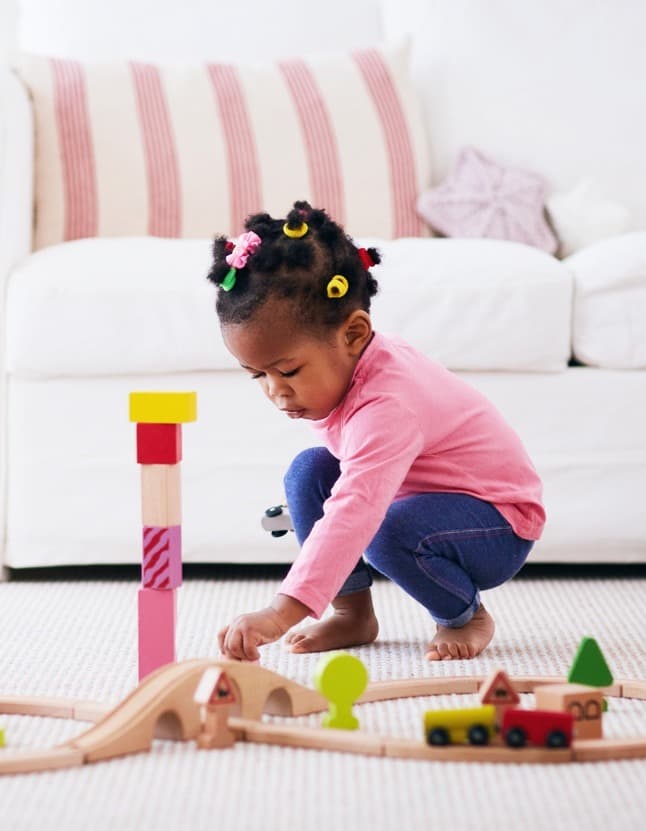
You ask your 2½-year-old what they had for lunch, and they answer in a stream of words. You understand maybe half of it. Your mother-in-law leans in and whispers, "What did they just say?" You laugh and translate. But inside, you're wondering: Is this normal? Should my child be clearer by now? When should strangers be able to understand them?
Speech clarity — what speech-language pathologists call intelligibility— is one of the most common parent concerns, and for good reason. Unclear speech can affect your child's confidence, communication at preschool, and family interactions. The challenge is knowing what's typical development and what warrants a conversation with a speech-language pathologist.
This guide breaks down speech sound development by age, explains why many young children are hard to understand, and helps you recognize when a consultation might help.
Speech Sound Development by Age
Children acquire speech sounds on a predictable (though not rigid) timeline. Not every child hits every milestone on the same date, but these ranges give you a sense of what's emerging when:
Typical Sound Emergence
Ages 1–2
p, b, m, d, n, h, w — These early sounds are easier to see and feel when you say them, which is why toddlers acquire them first.
Ages 2–3
t, k, g, f, ng — Sounds that require more tongue and lip control begin to emerge.
Ages 3–4
l, sh, ch, s, z, j — More complex sounds that demand precise mouth positioning.
Ages 5–6 and Beyond
r, th, and blends (like "str" or "bl") — These are the last to develop and may not be fully established until early school age.
Keep in mind: these are emergenceranges, not mastery. A child may make a "th" sound correctly 20% of the time at age 4, and not master it until age 6 or beyond. Progress is gradual.
Speech Intelligibility by Age: What to Expect
Intelligibility — the percentage of speech that listeners understand — is a better measure than whether your child can produce every sound perfectly. Here's a speech intelligibility chart by age:
Age 2
About 50% intelligible to familiar listeners (parents, caregivers). Strangers may understand very little.
Age 3
About 75% intelligible to familiar listeners. Strangers can understand most of what they say if given context.
Age 4
About 90%+ intelligible to strangers. Most people can understand what your child says without context.
Age 5+
Nearly 100% intelligible. Your child's speech is clear to anyone, even strangers and in noisy settings.
Common Speech Sound Patterns in Young Children
Many young children use predictable sound patterns that make speech harder to understand. These are called phonological processes — essentially, shortcuts or simplifications. Here are the most common:
Common Phonological Processes
Fronting
"tat" for "cat" — moving back-of-mouth sounds to the front
Stopping
"doo" for "zoo" — replacing fricatives (breathy sounds) with stops
Reduplication
"nana" for "banana" — repeating the same syllable
Simplifying Blends
"tap" for "strap" — dropping one sound from a consonant cluster
Weak Syllable Deletion
"nana" for "banana" — dropping unstressed syllables
The key insight: these patterns are developmentally normal. Most children naturally outgrow them. A 2-year-old saying "nana" for "banana" is not a red flag. A 5-year-old doing the same thing repeatedly may benefit from assessment.
What Speech Therapy for Articulation and Phonology Looks Like
If a speech-language pathologist identifies that your child would benefit from support with speech sounds, here's what to expect:
- Play-based approach for young children: SLPs don't teach in a clinical way. Instead, we build activities around your child's interests — games, songs, toys — that naturally target the sounds we're working on.
- Sound identification and practice: The SLP will show your child how to produce a sound correctly (sometimes using mirrors, touch cues, or visual models) and practice it in words and sentences.
- Parent coaching is essential: The most powerful therapy happens at home. Your SLP will teach you strategies and activities to reinforce sounds throughout the day — during meals, bath time, car rides — so your child hears and practices correct sounds in natural contexts.
- Progress monitoring: A good SLP tracks progress systematically and adjusts the approach if a child isn't making gains.
Supporting Speech Clarity at Home
You don't need to wait for a formal assessment to support your child's speech development. Here are evidence-based strategies you can use right now:
Model correct speech naturally
If your child says "wabbit," respond with "Yes! I see the rabbit too!" Use the correct sound without correcting them directly.
Slow down your own speech
When you speak more slowly and deliberately — especially during important routines — children have more time to listen and process sounds.
Face-to-face interaction matters
Children learn sounds by watching your mouth. Narrate what you're doing, make eye contact, and speak at their level.
Read books together
Repetitive, rhyming books expose children to a variety of sounds in a fun, low-pressure context. Pause and let them chime in.
Avoid direct correction
Saying "Don't say that, say it this way" can make children self-conscious. Recasting (repeating what they said correctly) works better.
Play sound games
Simple activities like animal sounds ("What sound does a dog make?"), singing, and sound-focused toys build awareness without feeling like work.
When to Consider a Consultation
If your child is outside the typical range for their age, or if you're noticing patterns that aren't improving, a speech-language pathologist can help clarify what's happening. Consider a consultation if:
- Your 3-year-old is significantly less intelligible than peers (less than 50% understood by strangers)
- Your child shows frequent frustration or avoids talking because people don't understand
- Speech sound patterns that should have resolved by age 4–5 are still present and frequent
- Your child is approaching kindergarten and speech clarity is a concern
- Sound errors are affecting their confidence or social interactions
Remember: a consultation is not a diagnosis. A speech-language pathologist will listen to your child, gather information about development, and help you understand whether your child is on track or would benefit from support.
The good news: speech sound development is very responsive to therapy when it's needed. Children are incredibly motivated to communicate, and with the right strategies and consistency, progress can be swift.
Common Questions
What percentage of my child's speech should strangers understand by age 4?
By around age 4, most children are considered roughly 90% or more intelligible to unfamiliar listeners, meaning strangers can usually understand what they say without needing extra context. If your child's speech is well below this range, a speech-language pathologist can help assess whether it reflects typical variation or an area that may benefit from support.
Is it normal for a 3-year-old to be hard to understand?
Some unclear speech is typical at age 3, but by then, roughly 75% of what your child says should be understandable to familiar listeners like parents and caregivers. If family members are frequently guessing or asking for clarification, a speech-language pathologist can assess whether your child's speech clarity is on track or could benefit from support.
Will my child grow out of unclear speech?
Some speech sound patterns do resolve naturally as children mature and their mouth muscles develop. However, not all patterns disappear on their own. A speech-language pathologist can assess whether a pattern is age-appropriate or likely to persist without support. Early identification makes intervention more efficient.
What is the difference between articulation and phonology?
Articulation refers to difficulty producing a specific sound — for example, saying "th" as "s." Phonological processes are patterns of sound simplification that many young children use naturally, like saying "tat" for "cat" or "nana" for "banana." Your SLP will assess which (or both) affects your child and design an approach accordingly.
How long does articulation therapy take?
That depends on several factors: your child's age, how many sounds are affected, how often you practice at home, and the specific sounds targeted. Your speech-language pathologist will set clear goals and track progress throughout therapy. Most children make noticeable gains within 4–8 weeks of consistent practice.
Disclaimer:This article is for educational purposes only and does not constitute a clinical assessment. Individual results vary based on each child's unique needs, development, and circumstances. A consultation with a registered speech-language pathologist does not constitute a formal diagnosis. Always consult with a qualified healthcare professional for personalized advice.